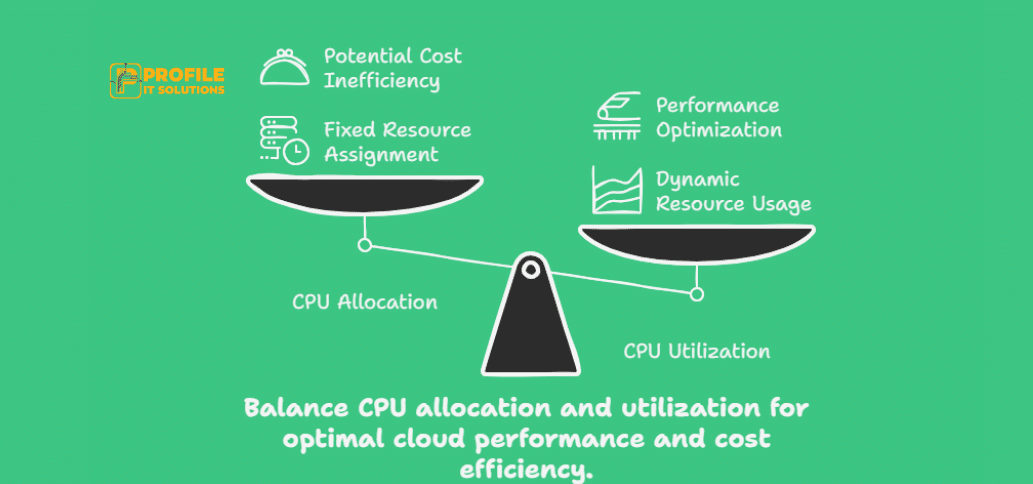
“CPU Utilization vs. Allocation: Skyrocketing Cloud Performance Without Breaking the Bank”
Introduction
In cloud computing, CPU allocation and CPU utilization are two critical factors that directly impact the performance and cost of running workloads. Efficiently managing these resources ensures that organizations get the best performance while minimizing expenses. Understanding the differences between CPU allocation and CPU utilization is key to optimizing cloud-based infrastructure.
Understanding CPU Allocation
CPU allocation refers to the amount of virtual CPU (vCPU) resources assigned to a cloud instance. Cloud providers allocate computing power in terms of vCPUs, with different instance types offering varying amounts of processing capacity. When provisioning an instance, organizations must decide how many vCPUs to allocate based on workload requirements.
Key Aspects of CPU Allocation:
- Fixed Allocation: The assigned vCPU resources remain constant, whether they are used fully or not.
- Scalability: Some cloud environments allow dynamic scaling where vCPU allocation can increase or decrease based on demand.
- Cost Impact: Many cloud providers charge based on the number of allocated vCPUs, regardless of actual usage.
Understanding CPU Utilization
CPU utilization refers to the percentage of allocated CPU power that is actively being used by applications. It is a dynamic metric that fluctuates based on workload demands. High CPU utilization indicates that the allocated resources are being effectively used, whereas low utilization may signal over-provisioning.
Key Aspects of CPU Utilization:
- Measured in Percentage: CPU utilization is typically monitored in real-time, showing the percentage of available processing power in use.
- Workload Variability: Different workloads have different CPU demands—some require continuous high usage, while others have periodic spikes.
- Performance Optimization: Monitoring utilization helps in fine-tuning infrastructure for better efficiency.
The Importance of Balancing CPU Allocation and Utilization
Properly aligning CPU allocation with actual utilization is essential for cost savings and performance optimization. Over-allocating vCPUs leads to unnecessary costs, while under-allocating results in performance bottlenecks.
How Over-Allocation Affects Cost
When organizations allocate more vCPUs than necessary:
- They pay for unused computing power.
- Instances with excessive vCPUs remain underutilized, increasing overall cloud expenses.
- Resources could have been better distributed among other workloads.
How Under-Allocation Affects Performance
If CPU allocation is too low for the workload:
- Applications may experience slow response times or crashes.
- Increased queuing of requests can lead to degraded user experience.
- Organizations may need to scale up instances suddenly, potentially leading to higher operational costs.
Strategies to Optimize CPU Allocation and Utilization
To ensure optimal resource usage and cost efficiency, organizations should implement strategic resource management techniques.
1. Right-Sizing Cloud Instances
Choosing the appropriate instance type based on actual workload requirements ensures that neither resources nor budget are wasted.
2. Monitoring CPU Usage Metrics
Utilizing cloud monitoring tools helps track CPU utilization trends over time. This data can guide decisions on whether to scale up or down.
3. Implementing Auto-Scaling
Auto-scaling allows instances to automatically adjust CPU allocation based on real-time demand, helping to maintain performance while controlling costs.
4. Using Burstable Instances for Variable Workloads
For workloads with fluctuating CPU requirements, burstable instances provide the flexibility to handle temporary spikes without maintaining high allocation levels continuously.
5. Leveraging Cost-Optimization Tools
Cloud cost management tools can help identify underutilized resources and suggest optimizations to reduce unnecessary spending.
Balancing CPU allocation and utilization is crucial for maintaining an efficient and cost-effective cloud infrastructure. By monitoring usage patterns, right-sizing instances, and leveraging auto-scaling, organizations can ensure they are only paying for the resources they need while maintaining optimal performance. Effective cloud resource management not only reduces unnecessary expenses but also enhances overall system reliability and responsiveness.