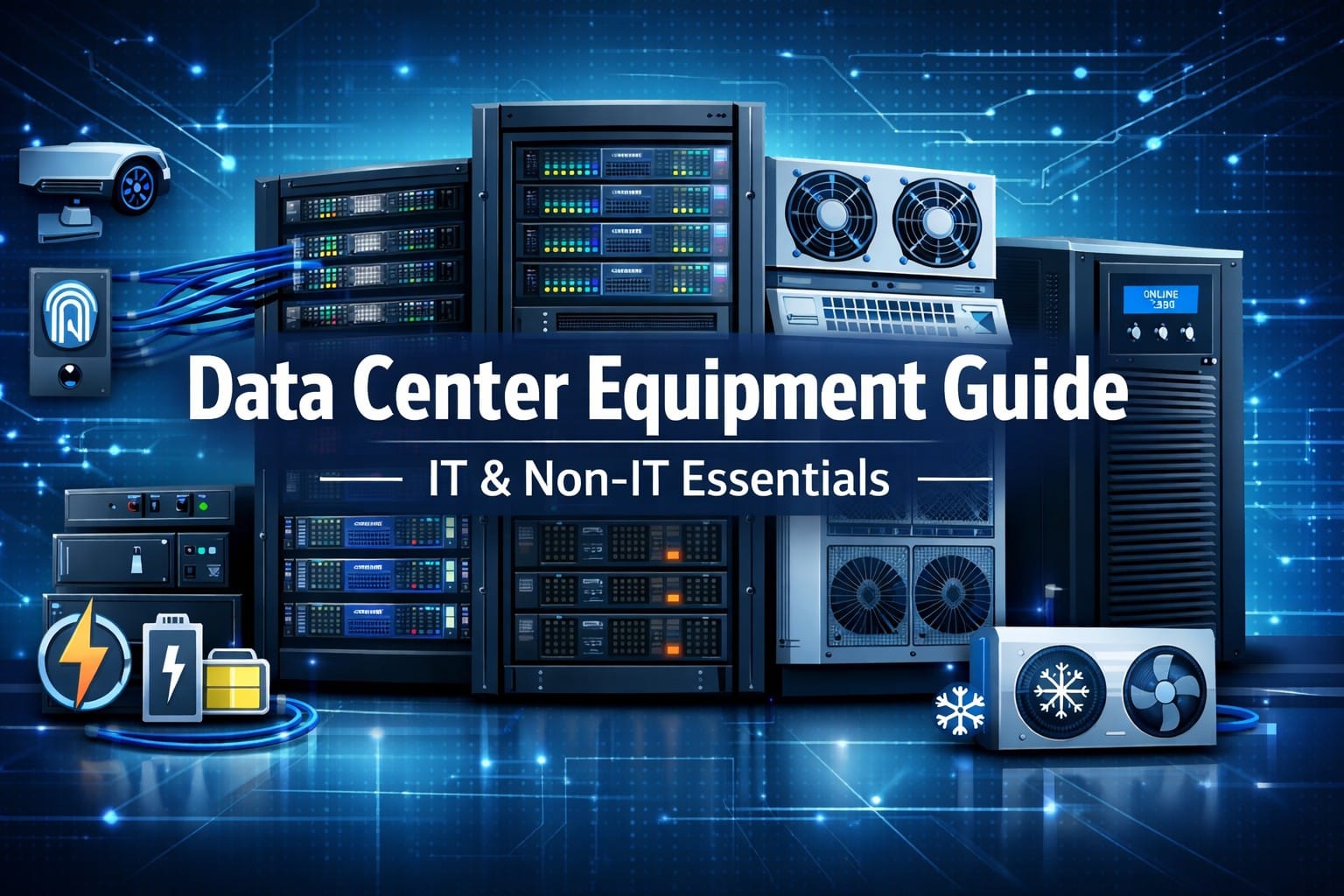
Comprehensive list of IT and Non-IT equipment used in setting up a data center
Here is the comprehensive list of IT and Non-IT equipment used in setting up a data center. When setting up a data center, both IT equipment and non-IT equipment are essential for ensuring optimal performance, efficiency, and security.
IT Component in a Data Center: ( IT Hardware Architecture )
The IT equipment in a data center serves as the technological backbone for data processing, storage, and communication. Below is a comprehensive list of IT equipment in a data center categorized by functionality.
-
Computing Hardware:
-
Rack-mounted servers
-
Blade servers
-
Tower servers
-
High-performance computing (HPC) systems
-
-
Storage Solutions:
-
SAN (Storage Area Network)
-
NAS (Network Attached Storage)
-
DAS (Direct Attached Storage)
-
Backup storage devices
-
Flash and SSD arrays
-
-
Networking Equipment:
-
Switches (core, distribution, and access layer)
-
Routers
-
Firewalls
-
Load balancers
-
SDN (Software-Defined Networking) controllers
-
Wireless access points (if applicable)
-
-
Power Distribution for IT:
-
Rack Power Distribution Units (PDUs)
-
Inline power meters for monitoring
-
-
Cabling Infrastructure:
-
Fiber optic cables
-
Ethernet cables (Cat5e, Cat6, Cat6a, Cat7)
-
Power cables and connectors
-
Patch panels
-
Cable trays and management accessories
-
-
Virtualization & Cloud Systems:
-
Hypervisors (VMware, Hyper-V, etc.)
-
Edge computing devices
-
Cloud gateways and accelerators
-
-
Monitoring and Management:
-
DCIM (Data Center Infrastructure Management) software
-
Network monitoring tools (e.g., Nagios, SolarWinds)
-
KVM switches (Keyboard, Video, Mouse)
-
Console servers
-
-
Security Devices:
-
Intrusion Detection Systems (IDS)
-
Intrusion Prevention Systems (IPS)
-
Web Application Firewalls (WAFs)
-
VPN appliances
-
-
Backup Systems:
-
Tape drives and libraries
-
Cloud-based backup systems
-
Data deduplication devices
-
-
Miscellaneous IT:
-
Time synchronization systems (NTP servers)
-
Out-of-Band (OOB) management systems
-
Server rails and mounting kits
-
With advancements like AI integration and 5G infrastructure, IT equipment evolves to support greater workloads, enabling data center optimization.
#Please Click Here To Get Data Center Costs
#Download IT Component in a Data Center PDF
Non IT Component in a Data Center: ( Non IT Hardware Architecture )
-
Power Systems:
-
UPS (Uninterruptible Power Supply)
-
Backup generators (diesel, gas, or hybrid)
-
Automatic Transfer Switches (ATS)
-
Power inverters
-
Battery systems (VRLA, Lithium-Ion, NiCad, etc.)
-
Power transformers
-
Surge protectors
-
-
Cooling Infrastructure:
-
CRAC (Computer Room Air Conditioning) units
-
CRAH (Computer Room Air Handler) units
-
In-row cooling systems
-
Liquid cooling systems (direct-to-chip or immersion cooling)
-
Chillers and cooling towers
-
Air economizers
-
Hot aisle/cold aisle containment systems
-
-
Fire Protection and Suppression Systems:
-
Gas-based fire suppression systems (FM200, Novec 1230, CO2 systems)
-
Sprinkler systems (water mist or dry pipe)
-
Smoke and heat detectors
-
Fire alarms and control panels
-
-
Environmental Monitoring:
-
Temperature and humidity sensors
-
Airflow sensors
-
Leak detection systems
-
-
Physical Security Systems:
-
Biometric access controls (fingerprint, retina, or facial recognition)
-
RFID access systems
-
CCTV cameras with storage servers
-
Intrusion detection sensors (motion, glass break, etc.)
-
-
Rack and Structural Components:
-
Server racks and cabinets
-
Rack accessories (blanking panels, fans, shelves)
-
Raised flooring and cable cutouts
-
Suspended ceilings with airflow panels
-
-
Lighting and Emergency Systems:
-
LED lights with dimming and zoning
-
Emergency exit lights
-
Emergency power off (EPO) systems
-
-
Transport and Installation Tools:
-
Rack lifts and server lifters
-
Trolleys and dollies
-
Cable pullers and organizers
-
-
Safety and Maintenance Equipment:
-
Anti-static wrist straps, gloves, and mats
-
First aid kits
-
Personal protective equipment (PPE)
-
-
Miscellaneous:
-
Labeling machines and tags for racks and cables
-
Cleaning equipment (vacuum cleaners, antistatic wipes)
-
Acoustic panels (for soundproofing)
-
Sustainability trends emphasize energy-efficient designs and smart cooling technologies, which lower costs and reduce data centers’ carbon footprint.
#Click here to Get Data Center Policies, Approval, Subsidies
#Download Non IT Component in a Data Center PDF
Integrating IT and Non-IT Components
Successful data center operation requires a seamless integration of IT and non-IT equipment. For instance, AI-enabled monitoring systems can optimize cooling based on server load, while smart power grids ensure uninterrupted power for IT equipment. Combining IT and non-IT solutions allows organizations to manage workloads efficiently while prioritizing sustainability and scalability.
Let’s have a quick elaboration of IT and Non IT component functionalities:-
IT Equipment in a Data Center: Essential IT Hardware Components
The IT equipment in a data center serves as the technological backbone for data processing, storage, and communication. Below is a comprehensive list of IT equipment in a data center categorized by functionality.
1. Computing Hardware
- Rack-mounted servers, Blade servers, and Tower servers are the workhorses of the data center, designed for efficiency and scalability.
- High-performance computing (HPC) systems power intensive computational tasks.
2. Storage Solutions
- Storage options like SAN (Storage Area Network), NAS (Network Attached Storage), and DAS (Direct Attached Storage) ensure fast and reliable data access.
- Advanced storage devices such as Backup storage systems and Flash/SSD arrays provide durability and speed.
3. Networking Equipment
- A data center relies on Switches, Routers, and Firewalls for seamless network connectivity.
- Tools like Load balancers and SDN (Software-Defined Networking) controllers enhance operational efficiency.
- Wireless access points (where applicable) expand network capabilities.
4. Power Distribution for IT
- Rack Power Distribution Units (PDUs) and Inline power meters are essential for monitoring and managing power distribution to IT systems.
5. Cabling Infrastructure
- Fiber optic cables, Ethernet cables (Cat5e to Cat7), Patch panels, and Cable trays enable high-speed data transfer and structured cable management.
6. Virtualization & Cloud Systems
- Platforms like Hypervisors and Edge computing devices bridge local and cloud resources efficiently.
- Cloud gateways streamline data flow between local and cloud environments.
7. Monitoring and Management Tools
- DCIM software, Network monitoring tools, KVM switches, and Console servers offer visibility and control over data center operations.
8. Security Devices
- Systems like Intrusion Detection (IDS), Intrusion Prevention (IPS), Web Application Firewalls (WAFs), and VPN appliances safeguard the data center from cyber threats.
9. Backup Systems in a Data Center
Backup systems play a pivotal role in ensuring data safety and recovery, protecting organizations from data loss due to hardware failure, cyberattacks, or natural disasters. Here’s a breakdown:
- Tape Drives and Libraries: Though older, tape storage remains a reliable and cost-effective medium for long-term archiving. Modern tape libraries can store vast amounts of data securely and offline, protecting it from cyber threats.
- Cloud-Based Backup Systems: These systems provide off-site backups, ensuring business continuity by enabling rapid data restoration. Cloud backups often integrate automated schedules and allow scalability for growing data needs.
- Data Deduplication Devices: By eliminating redundant data across backups, these devices optimize storage capacity, reduce costs, and accelerate backup and recovery processes.
10. Miscellaneous IT Equipment in a Data Center
This category includes specialized tools and systems that ensure smooth operations, synchronization, and infrastructure support:
- Time Synchronization Systems (NTP Servers): Accurate timekeeping is essential for server logs, database operations, and network security. Network Time Protocol (NTP) servers provide reliable and synchronized time across all devices.
- Out-of-Band (OOB) Management Systems: OOB systems allow remote access to network devices, servers, and critical IT infrastructure, even during network outages, ensuring minimal downtime and faster issue resolution.
- Server Rails and Mounting Kits: These accessories provide secure and flexible mounting options for servers in racks, enabling easy installation, accessibility, and maintenance.
#Please Click Here to get Data Center Server Room Design.
Non-IT Equipment in a Data Center: Hardware Infrastructure and Safety Backbone
While IT equipment powers operations, non-IT equipment in a data center ensures that these systems run safely and efficiently. Below is a detailed list of non-IT equipment in a data center.
1. Power Systems
- UPS (Uninterruptible Power Supply) units and Backup generators provide critical power continuity.
- Components like Automatic Transfer Switches (ATS), Power transformers, and Surge protectors enhance reliability.
2. Cooling Infrastructure
- Equipment like CRAC/CRAH units, In-row cooling systems, and Liquid cooling systems maintain optimal temperatures for IT hardware.
- Advanced solutions such as Air economizers and Hot/cold aisle containment systems boost energy efficiency.
3. Fire Protection Systems
- Fire suppression technologies, including FM200, Novec 1230, and CO2 systems, protect sensitive equipment.
- Smoke detectors, Fire alarms, and Sprinkler systems are vital for safety.
4. Environmental Monitoring
- Temperature sensors, Humidity sensors, and Leak detection systems monitor conditions to prevent environmental risks.
5. Physical Security Systems
- Access control systems like Biometric authentication, RFID access systems, and CCTV cameras safeguard physical assets.
- Intrusion detection sensors monitor unauthorized access attempts.
6. Rack and Structural Components
- Server racks, Raised flooring, and Cable cutouts support IT equipment and improve airflow.
- Accessories like Rack fans and Blanking panels enhance thermal management.
7. Lighting and Emergency Systems
- LED Lights with Dimming and Zoning: These energy-efficient lights provide optimal illumination in key areas while allowing zoning to focus light where needed, reducing energy costs.
- Emergency Exit Lights: Critical during power failures or emergencies, these guide personnel to safe exits in compliance with safety regulations.
- Emergency Power Off (EPO) Systems: These systems can instantly cut power to the entire data center during critical emergencies, protecting both personnel and equipment.
8. Transport and Installation Tools in a Data Center
Efficient installation and maintenance require specialized tools for handling heavy and sensitive IT equipment:
- Rack Lifts and Server Lifters: Designed to move heavy servers safely, minimizing physical strain and reducing the risk of damage during installation.
- Trolleys and Dollies: Used for transporting bulky items like servers and racks across the facility efficiently.
- Cable Pullers and Organizers: Facilitate smooth cabling installations, ensuring proper arrangement and minimizing the risk of tangling.
9. Safety and Maintenance Equipment in a Data Center
To maintain operational integrity and safety, the following equipment is indispensable:
- Anti-Static Wrist Straps, Gloves, and Mats: Prevent electrostatic discharge (ESD) that could damage sensitive IT components.
- First Aid Kits: Essential for addressing minor injuries during on-site activities.
- Personal Protective Equipment (PPE): Includes helmets, gloves, and protective eyewear to safeguard workers in high-risk areas.
10. Miscellaneous Non-IT Equipment in a Data Center
Additional equipment enhances organization, cleanliness, and environmental quality:
- Labeling Machines and Tags: These ensure organized cabling and equipment, simplifying maintenance and troubleshooting.
- Cleaning Equipment: Tools like vacuum cleaners and anti-static wipes are essential for maintaining a dust-free environment, and protecting sensitive electronics.
- Acoustic Panels: Installed to minimize noise from servers and cooling systems, ensuring a quieter workspace.
#Click Here if you want to Start Data Center Business In India